There are no items in your cart
Add More
Add More
| Item Details | Price | ||
|---|---|---|---|
What Every Trader Needs to Know, How artificial intelligence and Algo is reshaping crypto, stocks, Nifty 50, Bank Nifty and forex — and how you can use it to trade smarter, not harder.
{{DATE}}
"The edge in 2026 is not having information — it's processing chart and OI data faster and more consistently than other Retail Traders." - Anil Hanegave
Artificial Intelligence is no longer just a futuristic concept, $25B Algo trading market 2026
they daily use AI-powered trading bots for scanning candlestick charts, analyzing Open Interest data, and placing trades across stock, index, Nifty 50, Bank Nifty, forex, and cryptocurrency markets.
One of my Friend was working with hedge funds and he was telling me that large financial institutions was using high end AI bots. Luckily it has now become accessible to retail traders like me and you. In 2026, setting up an automated trading bot is easier than ever, and interest in AI trading has increased exponentially worldwide. Every IT Person who want to do trading also want to use AI for Trading.
But before you start imagining a machine that prints money while you sleep, there's something important to trading strategy.
AI trading bots don't guarantee profits, and they certainly don't eliminate risk. In fact, many traders lose money because they trust automation without fully understanding how it works, How Central Pivot range strategies works.
The reality is much simpler: a trading bot is only as good as the strategy entry (A), stop loss (B) and target (C) behind it. The only things is, It can execute trades faster than any human, monitor all markets 24/7, and remove emotional decision-making, but it still human intervention, needs clear rules and proper risk management.
In this blog, we'll cut through the hype and explore what AI trading bots actually do, how they work, which markets they're best suited for, the risks most beginners overlook, and how smart traders are using automation to gain an edge in today's markets.
Whether you're trading Nifty 50 index, stocks, forex, crypto, or options, understanding AI-powered trading could become one of the most valuable skills of the next decade.
What Are AI Trading Bots?
An AI trading bot is software or program that uses artificial intelligence, machine learning, and predefined rules to analyse stock , commodity, forex markets and execute trades automatically — without you needing to stare at charts all day.
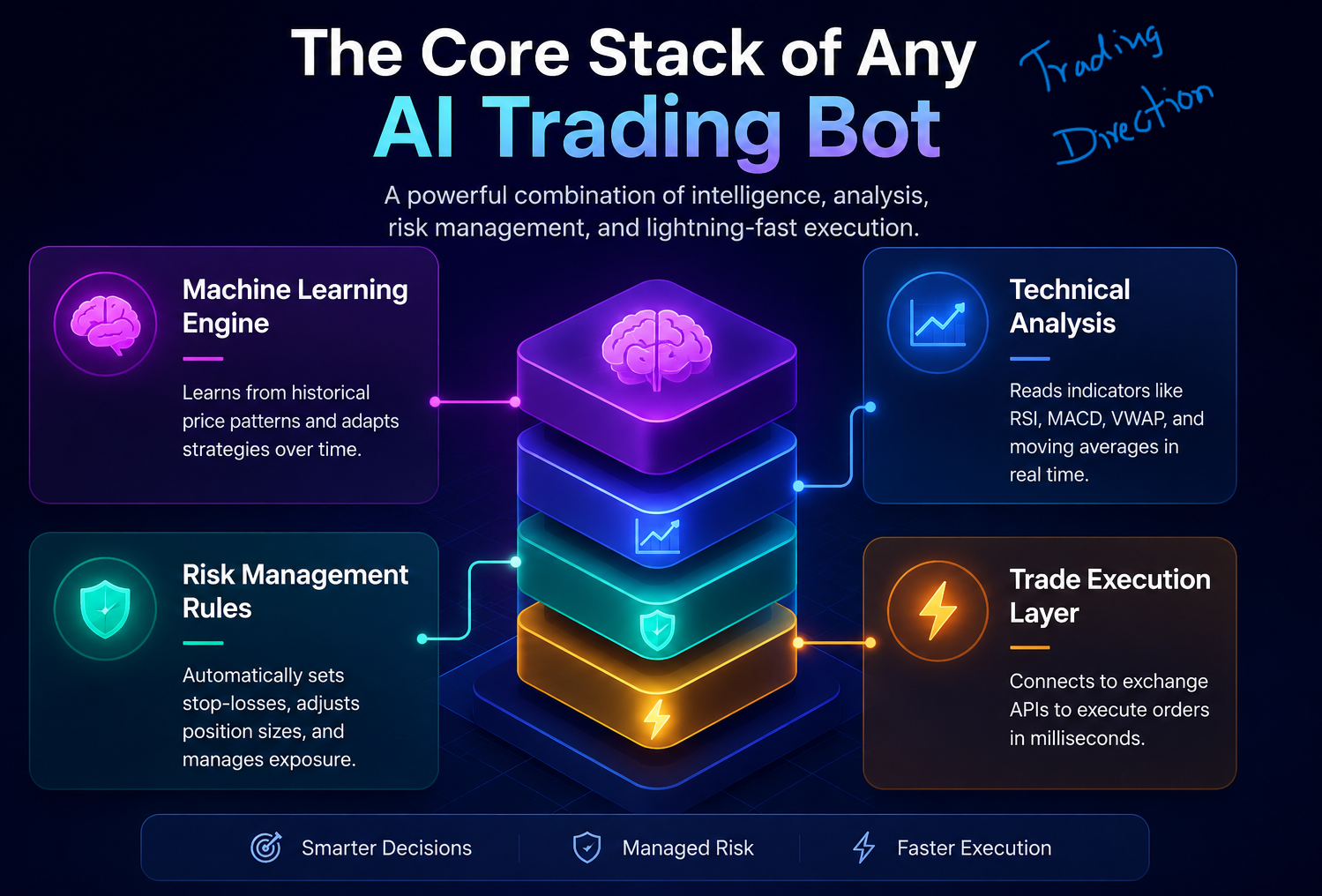
above image components work together to monitor hundreds of assets simultaneously — something no human trader can do alone.
Algo or AI Trading Bots Across Different Markets
All Bots are not suitable for you. Each share market has its own dynamics, and trading styles like intraday trading, Swing trading, BTST Trading and Positional Trading.
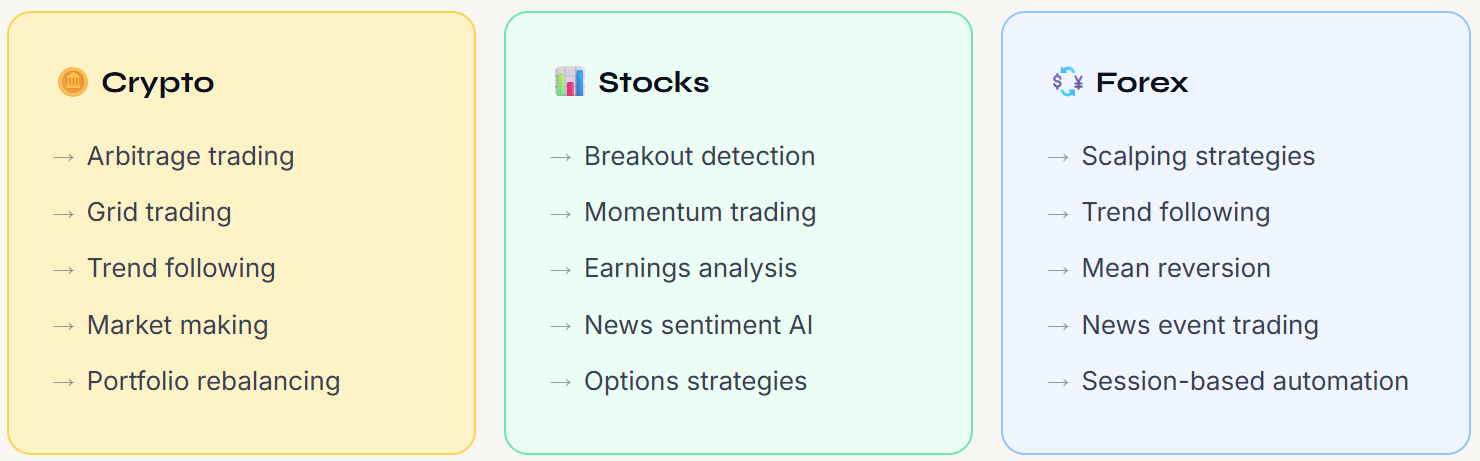
Stock market bots commonly layer in technical indicators like Central Pivot Range (CPR) VWAP, Moving Averages, and volume analysis. Forex bots works well on currency and Crypto markets that run nearly 24 hours a day, making automation especially valuable for catching overnight moves, When you are sleeping in India.
Key Advantages of AI Trading Bots
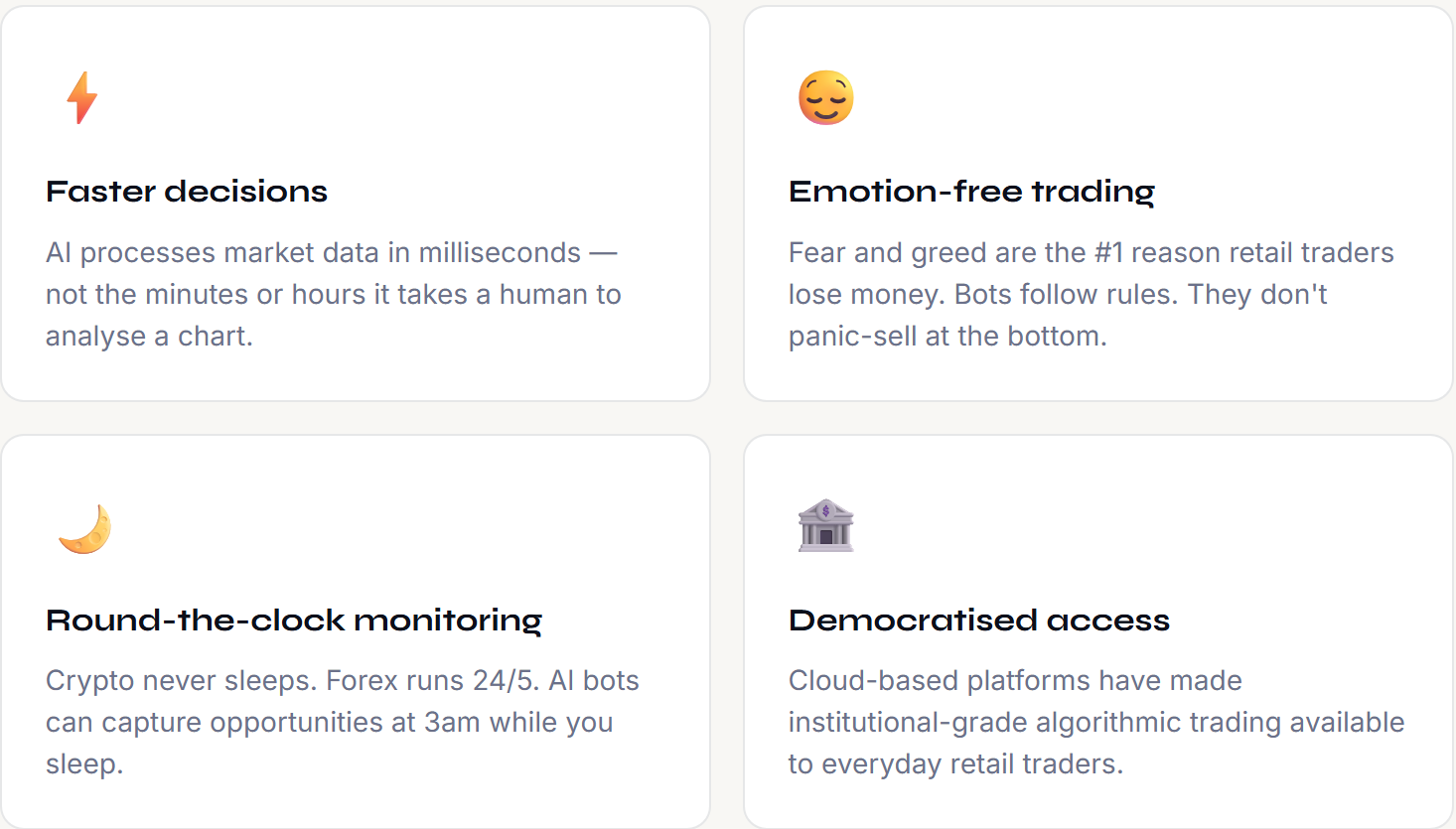
What bots genuinely do better than humans
Other blogs that only lists the benefits is selling you something, but Here's what can actually go wrong — and often does.
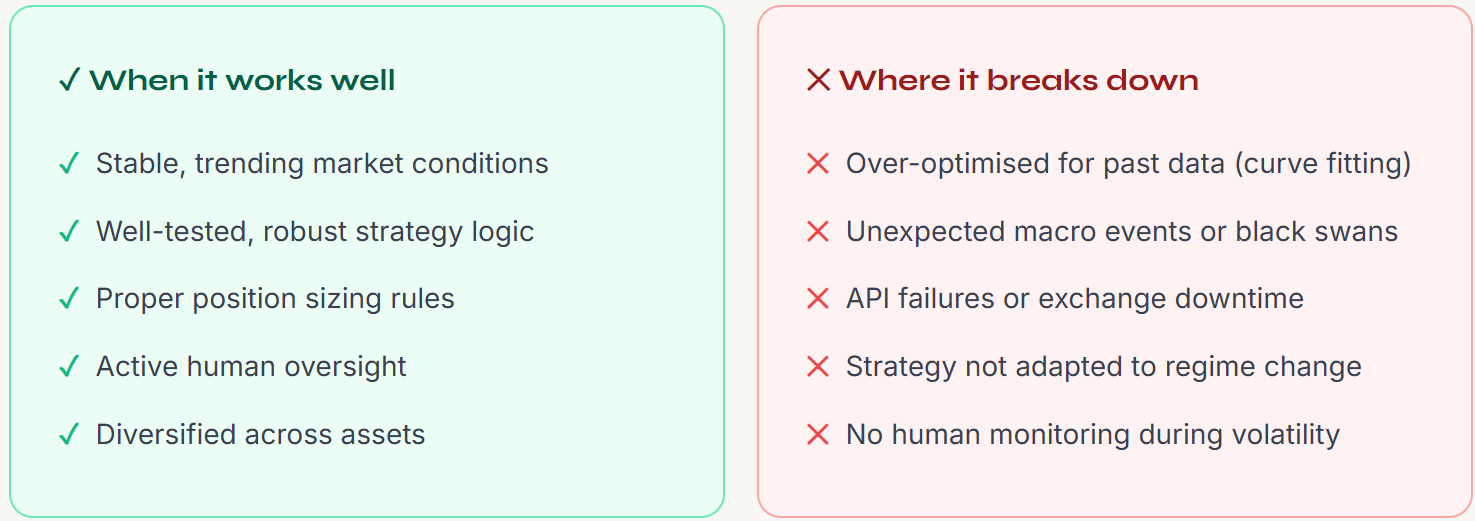
A strategy that shows 70% win rate on back testing often performs good in forex but not perform in Indian Market. Why? Because past data is fixed — real markets evolve, shift regimes, and throw up events the model was never trained on. Always forward-test by human learn strategy on paper before going live.
AI vs. Human Traders: Who Actually Wins? With my experience, neither replaces the other — the real advantage is in knowing who handles what. combine both power.
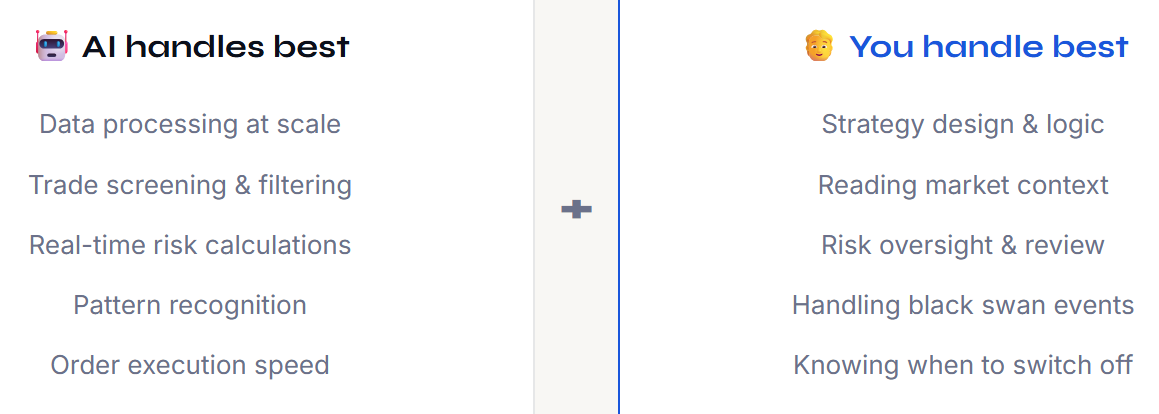
The most successful retail traders in 2026 form India aren't choosing between human and AI — they're best trained traders. Bot is just a employee.
How to Use AI Trading Bots Safely as a Retail Trader
Jumping without mentorship Program is the fastest way to lose money. Here's a meaningful approach.
The smart retail trader's AI or Bot Trading checklist
1. Learn market structure and strategy first. Understand how price and candlestick moves, what drives implied volatility, and stop loss risk concepts.
2. Start with paper trading. Run your bot in simulation mode for at least 4–8 weeks before risking real rupees.
3. Backtest completely. Use at least 2–3 years of historical data, across different market conditions (trending, ranging, volatile).
4. Set 2 to 3 %risk limits. Define the maximum drawdown 25 % at which you will shut the bot off — and actually do it.
5. Monitor regularly with alerts. Automated doesn't mean unattended. Check performance weekly and adapt as market conditions shift.
Frequently Asked Questions
Conclusion:
AI trading bots are not money-making machines, but when used with CPR indicator strategies, they can give traders a real advantage. Algo Scripts and programs help remove emotional decision-making, execute trades faster, and monitor opportunities across multiple markets simultaneously. The traders who succeeded in 2026 were those who used AI as an assistant — not a replacement. They combined market knowledge, AI-powered automation, and disciplined risk management into a well-structured trading system. Final judgment is always best left to a real human. Start with small capital, test your strategies thoroughly, and focus on understanding why your system works. If you want help then Contact WA +91 9175862166

Mr. Anil Hanegave, Founder of Trading Direction
AI Trader | Mentor | Authored 8 Books
 Launch your Graphy