CPR Strategy

Narrow CPR Stocks for Today: How to Read the List and Actually Trade It

You've got today's narrow CPR stocks in front of you. Here's how to shortlist, time, and trade them without jumping into the first name on the list.

AH
Anil Hanegave โ€” Founder, Trading Direction
21,000+ students trained ยท Published trading author ยท 9+ years in the market
Quick Answer: Narrow CPR stocks for today are stocks whose Central Pivot Range (Top Central Pivot, Pivot Point, Bottom Central Pivot) is unusually tight compared to the stock's average CPR width โ€” a sign that yesterday's trading range compressed and today's move could expand sharply in one direction. But a narrow CPR by itself is not a trade. You still need volume confirmation, a clean breakout candle, and a defined stop-loss before entry โ€” the list only tells you where to look, not what to buy.
Definition: Narrow CPR refers to a day where the distance between the Top Central Pivot (TC) and Bottom Central Pivot (BC) is significantly smaller than the stock's recent average CPR width, usually calculated as CPR Width % = (TC โˆ’ BC) / Pivot Point ร— 100.

Every morning, a fresh batch of narrow CPR stocks shows up on your screener, and the instinct is to open the first five charts and look for a breakout. That's usually where the trade starts going wrong โ€” not because narrow CPR is a bad concept, but because the list is a starting point, not a signal. A stock can have the narrowest CPR of the day and still chop sideways for three hours if nothing else lines up behind it.

What "Narrow CPR" Actually Means

CPR โ€” Central Pivot Range โ€” is built from the previous day's high, low, and close. When TC and BC sit close to the Pivot Point, it means yesterday's range was tight and indecisive. Price didn't travel far, so both buyers and sellers are sitting on unresolved positions. A narrow CPR is the market's way of saying "yesterday was quiet, and quiet days are often followed by a decision."

That decision can go either way. Narrow CPR tells you volatility is likely to expand โ€” it does not tell you the direction. That part is decided by how price behaves in the first 15โ€“30 minutes against the CPR levels.

Yesterday: Narrow CPR TC PP BC Today: Range Expansion CPR zone Breakout candle closes above TC Expansion move

Why Today's Narrow CPR List Matters More Than a Random Scan

A generic breakout scan looks for stocks already moving. A narrow CPR list looks for stocks about to move, before the crowd notices. That's the edge โ€” you're positioning ahead of the expansion instead of chasing it after the first big candle has already used up half the day's range.

Yahan problem strategy ki nahi, timing ki hai โ€” the concept is sound, but most traders open the list at 9:16, jump into whichever chart looks exciting, and skip the fifteen minutes it takes to actually confirm the setup.

How to Read Today's Narrow CPR Stocks List

Treat the list as a funnel, not a menu. When you pull today's narrow CPR stocks, you're looking at three things side by side, not one:

  • CPR width % โ€” how narrow is it relative to that stock's own recent average, not an arbitrary fixed number
  • Where price opened relative to TC, PP, and BC โ€” an open right at the CPR gives a cleaner directional read than a gap-open away from it
  • Whether the stock also shows up on a volume or momentum filter โ€” narrow CPR plus dead volume usually stays narrow all day

A stock that's narrow on CPR but wide on its average daily range is far more interesting than a naturally quiet, low-beta stock that happens to be narrow today.

See Today's Live Narrow CPR Screener

Instead of reading the list off someone else's screenshot, you can pull it fresh every session. The Tomorrow Narrow CPR Stocks screener by Trading Direction on Chartink runs this exact logic in one click:

  • Previous day's High and Low both greater than 0 โ€” filters out junk/illiquid data rows
  • CPR width โ€” calculated from yesterday's High, Low and Close, and required to be under 0.5% of the pivot โ€” this is the actual narrow-CPR condition, not a visual guess
  • Daily close above โ‚น20 โ€” keeps penny stocks and illiquid low-price counters out of the list
  • Daily volume above 1,00,000 shares โ€” a basic liquidity filter so the setup is tradeable, not just theoretically narrow

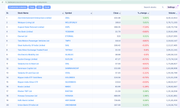
Here's what the scanner setup and a live output list look like:
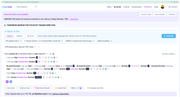
Chartink Tomorrow Narrow CPR Stocks by Trading Direction screener filter conditions
Chartink Tomorrow Narrow CPR Stocks by Trading Direction screener results list with close, percent change and volume

Notice the list is a mix of large caps and smaller names, up and down movers, high and low volume โ€” that's expected. The screener's job is only to find the narrow CPR; your shortlisting checklist below decides which of these are actually worth watching tomorrow.

If you'd rather watch it explained on a chart than read it:

Shortlisting Checklist Before You Even Open the Chart

  • Sector context โ€” is the broader sector or index also showing compression, or is this stock isolated
  • Liquidity โ€” enough volume and open interest (for F&O names) to enter and exit without slippage
  • No major event risk โ€” no results, corporate action, or news pending that could gap the stock unpredictably
  • CPR width genuinely narrow versus the stock's own last 10โ€“15 sessions, not just "narrow-looking" on the chart
  • Price sitting close enough to CPR levels that a breakout is a realistic 30โ€“60 minute possibility, not a 3% move away

If a stock fails two or more of these, it goes to the bottom of the list, no matter how tight the CPR looks.

Entry, Stop-Loss and Target Framework

This is where most narrow CPR trades are actually won or lost โ€” not in the scanning.

  • Entry: A candle closing beyond TC (for longs) or BC (for shorts) with volume higher than the last few candles โ€” not the first wick that pokes through
  • Confirmation: Price holding beyond the level for at least one more candle instead of slipping straight back inside the CPR
  • Stop-loss: Just inside the opposite CPR boundary, or the low/high of the breakout candle โ€” decide this before entry, not after
  • Target: The next meaningful resistance/support, or a fixed risk-reward multiple decided in advance โ€” narrow CPR expansions can be sharp, so trailing the stop once the move is in your favor protects the trade
  • Invalidation: If price re-enters the CPR zone after the breakout, the setup is off โ€” don't average in hoping it reclaims the level

The setup tells you when a trade may be worth considering. Risk management tells you how much that idea is allowed to cost you.

Risk-Reward on a Narrow CPR Breakout CPR Entry Stop-Loss Target Risk defined before entry, reward left open to run
Size the trade before you take it: once you've marked entry and stop-loss on the chart, run it through our position size calculator so the quantity is based on your risk per trade, not on how convinced you feel about the setup. [Anil โ€” confirm this is the right link, or share the URL for the one-day-advance CPR calculator you want linked here instead.]

Narrow CPR vs Wide CPR โ€” What Changes

FactorNarrow CPR DayWide CPR Day
What it signalsRange compression, potential expansionTrending or already volatile market
Typical strategyBreakout above TC / below BCRange trading between CPR and S/R levels
Best trade styleMomentum / trend-initiation tradesMean-reversion / range trades
Risk patternFakeouts near the level if volume is weakChoppiness if price stays inside a wide band
Ideal watch windowFirst 30โ€“60 minutes of the sessionCan develop through the day

Where Traders Go Wrong With Narrow CPR Lists

Here's where it gets interesting โ€” the list itself is rarely the problem.

  • Entering on the very first candle that touches TC or BC, before the close confirms it
  • Trading every stock on the list instead of the two or three that also pass the selection checklist
  • Ignoring that narrow CPR near a major event (results, RBI policy, global cues) can whipsaw both directions before settling
  • Widening the stop-loss mid-trade because "the breakout looked strong" โ€” the level either holds or it doesn't
  • Checking the list only once at market open and never revisiting price action against the CPR later in the session

A breakout is not automatically a trade. The setup looks good on paper โ€” the problem starts after entry, when discipline decides the outcome more than the scan did.

Frequently Asked Questions

What does "narrow CPR" mean for a stock?

It means the distance between the stock's Top Central Pivot and Bottom Central Pivot is unusually small compared to its recent average, signaling range compression that often precedes a bigger directional move.

How many narrow CPR stocks should I trade in a day?

Focus on two to four stocks that pass both the CPR-width check and the broader selection checklist (liquidity, sector context, no event risk) rather than attempting every name on the list.

Is a narrow CPR stock guaranteed to break out?

No. Narrow CPR only signals a higher probability of range expansion โ€” direction and follow-through still depend on volume, market context, and how price behaves at the CPR levels during the session.

What time should I check today's narrow CPR stocks list?

The list itself is usually available before market open since it's based on the previous session's high, low, and close, but entries should wait for confirmation in the first 15โ€“30 minutes of trading rather than being taken at the open.

Do narrow CPR stocks only work with high volume?

Volume confirmation significantly improves reliability. A narrow CPR breakout on weak volume is more likely to fail and re-enter the range, so volume should be checked alongside the CPR width, not treated as optional.

Should beginners trade narrow CPR stocks?

Beginners can use narrow CPR as a watchlist tool, but should practice on a small number of liquid, well-known stocks first and always define stop-loss and position size before entry rather than trading the list live from day one.

The Practical Takeaway

Today's narrow CPR stocks list is a shortlist, not a signal. Pull the list, filter it against liquidity, sector context, and event risk, wait for a confirmed close beyond TC or BC with volume behind it, and decide your stop-loss before you decide your excitement. Do this consistently and the list starts doing what it's meant to do โ€” narrowing your search, not your risk discipline.

If you want a structured way to build and read this kind of CPR-based watchlist every day, our CPR Brahmastra Strategy course walks through the full framework, and the complete course library is on the Trading Direction store.

Questions about applying this to today's list? Message us on WhatsApp at 9175862166 โ€” or explore student outcomes on our testimonials page.
This article is for educational purposes only and does not constitute investment advice. Trading in equity and derivatives markets is subject to market risk. Please consult your financial advisor and read all scheme-related documents carefully before investing. SEBI Registration/compliance details as applicable to Trading Direction.
WA Group ๐Ÿน Live Webinar, Sun

Popular Blogs

Recent Posts

Narrow CPR Stocks for Today: How to Read the List and Actually Trade It Aug 14, 2026
Option Position Size Calculator: Sizing Trades by 3% and 4% Risk Aug 14, 2026
Stop-Loss Calculator: Options, Stock & Commodity Trading Aug 14, 2026
Reward to Risk Ratio Calculator: Know Your Numbers Before You Enter Aug 14, 2026

Explore More

๐Ÿ“ข Share this Article